


Ferrosilicon (FeSi) is an essential alloy widely used in various industrial applications, including steel production, manufacturing of cast iron, and the production of silicon-based products. The alloy's composition and quality have a significant impact on the production process and final product quality. One key factor in the variability of ferrosilicon is the titanium content, which leads to the distinction between standard ferrosilicon and low-titania ferrosilicon.
Understanding the difference between these two types of ferrosilicon is crucial for industries that rely on these materials for high-performance outputs. This article will explore the key differences between standard and low-titania FeSi, covering their chemical composition, impact on industrial processes, and specific applications. By the end of this article, you’ll gain valuable insights into which type of ferrosilicon is best suited for your specific needs.
Contents
Overview of Ferrosilicon
Ferrosilicon is an alloy composed primarily of iron (Fe) and silicon (Si), with varying amounts of other elements, including aluminum, calcium, and titanium. It is an essential component in steelmaking, serving as a deoxidizer and an alloying element. The specific properties of ferrosilicon, including its melting point, density, and chemical reactivity, depend largely on the percentage of silicon and other elements present.
There are different grades and compositions of ferrosilicon, with standard ferrosilicon and low-titania ferrosilicon being the two most commonly discussed types. Both types share the same base ingredients but differ in their titanium content, which influences their performance in various applications.
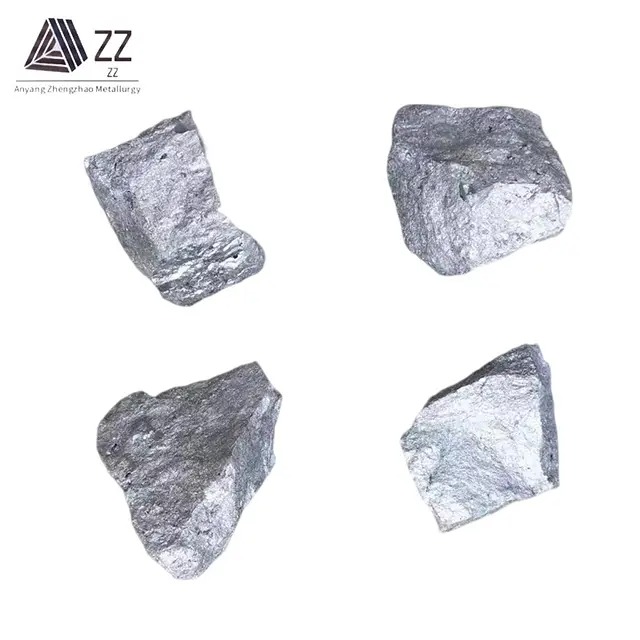
Chemical Composition: Standard vs. Low-Titania FeSi
Standard Ferrosilicon
Standard ferrosilicon typically contains around 0.5% to 3% titanium in its composition. The titanium in standard FeSi is often present as a byproduct of the raw materials used in its production. This composition gives standard FeSi its characteristic properties, including the ability to act as a deoxidizer in steelmaking and a key ingredient in the production of various silicon-based alloys.
Low-Titania Ferrosilicon
Low-titania ferrosilicon, on the other hand, contains less than 0.5% titanium. This type of ferrosilicon is specifically engineered to have a reduced titanium content, making it more suitable for industries that require a higher level of purity and specific performance characteristics.
| Property | Standard Ferrosilicon | Low-Titania Ferrosilicon |
|---|---|---|
| Titanium Content | 0.5% - 3% | Less than 0.5% |
| Common Uses | Steelmaking, Cast Iron | Specialty Alloys, High-Precision Steelmaking |
| Deoxidization Power | High | Moderate to High |
| Production Cost | Lower | Higher |
The titanium content in ferrosilicon can significantly influence its deoxidizing ability and impact the physical properties of the resulting alloy.
Impact of Titanium on Ferrosilicon Properties
Titanium plays a crucial role in the properties of ferrosilicon. When titanium is present in higher concentrations, it can contribute to increased hardness and improved strength in the final alloy. However, excessive titanium levels can lead to a number of challenges:
Reduced Fluidity: Higher titanium content can reduce the fluidity of the molten steel, making it harder to shape and cast the alloy.
Increased Brittleness: Elevated titanium concentrations can result in a more brittle alloy, making it less suitable for certain applications that require toughness and flexibility.
Increased Cost: Titanium is an expensive element, and higher levels of titanium in ferrosilicon can increase the cost of production.
In contrast, low-titania ferrosilicon has fewer issues related to fluidity and brittleness, making it more suitable for applications requiring a higher degree of precision and purity. For example, low-titania FeSi is often used in high-quality steel production, where exacting standards for alloy composition are critical.
Applications of Standard Ferrosilicon
Standard ferrosilicon is most commonly used in steelmaking, casting, and the production of cast iron. It is typically employed in the following processes:
Deoxidation in Steel Production: Ferrosilicon is used as a deoxidizer to remove oxygen impurities from steel. The presence of titanium helps in this process, enhancing the efficiency of the deoxidation.
Alloying Agent: It is used to introduce silicon into steel, improving its strength, elasticity, and resistance to corrosion.
Production of Cast Iron: Standard ferrosilicon is a key component in the production of cast iron, helping to enhance the material's toughness and wear resistance.
In general, standard ferrosilicon is well-suited for large-scale industrial applications where the precise titanium content is less critical.
Applications of Low-Titania Ferrosilicon
Low-titania ferrosilicon is particularly valued in industries that require high-performance alloys and precision materials. Its lower titanium content offers several advantages in specialized applications:
High-Quality Steelmaking: Low-titania FeSi is used in high-precision steel production, particularly when low levels of contamination and specific alloying are required.
High-Performance Alloys: It is commonly used in the production of alloys that demand high purity, such as in the aerospace and automotive industries, where metal strength and durability are critical.
Chemical Industry: Low-titania ferrosilicon is also used in the chemical industry for producing specialty silicon-based compounds and materials that require minimal impurities.
The reduced titanium content ensures a purer final product, making low-titania ferrosilicon the preferred choice in applications demanding tight control over material properties.
Advantages and Disadvantages of Standard FeSi
Advantages:
Cost-Effective: Standard ferrosilicon is generally less expensive than low-titania FeSi due to the lower cost of production.
Effective Deoxidizer: It is highly effective in removing oxygen from steel and cast iron, improving their overall quality.
Versatile Applications: Standard FeSi is suitable for a wide range of industrial uses, from steel production to casting.
Disadvantages:
Higher Titanium Content: The presence of higher titanium can lead to issues with brittleness and reduced fluidity.
Less Precision: The relatively high titanium content makes it less suitable for industries requiring precise alloy compositions.
Advantages and Disadvantages of Low-Titania FeSi
Advantages:
High Purity: The reduced titanium content makes it ideal for high-performance applications that require minimal contamination.
Improved Physical Properties: It offers better fluidity and reduced brittleness compared to standard FeSi, leading to improved material performance.
Precision in Alloying: It is preferred in industries where exacting standards for alloy composition are necessary, such as aerospace and electronics.
Disadvantages:
Higher Cost: The production of low-titania ferrosilicon is more costly due to the additional refinement required to reduce titanium levels.
Limited Availability: It may not be as widely available as standard ferrosilicon, limiting its use in some applications.

Choosing Between Standard and Low-Titania FeSi
The choice between standard and low-titania ferrosilicon largely depends on the specific requirements of the application. Here are some key considerations:
For Large-Scale Steel Production: Standard ferrosilicon is typically the best option due to its lower cost and high deoxidation efficiency.
For High-Performance Alloys: Low-titania ferrosilicon is better suited for applications that require high purity and minimal contamination.
For Specialty Applications: Industries such as aerospace, automotive, and electronics often require low-titania FeSi to meet their stringent performance standards.
Ultimately, the decision should be based on factors such as cost, purity requirements, and the specific performance characteristics needed in the final product.
Conclusion
The distinction between standard and low-titania ferrosilicon lies primarily in the titanium content, which affects the material's properties and suitability for various industrial applications. While standard FeSi is more cost-effective and widely used in steel production, low-titania FeSi is preferred for applications that demand high precision and minimal impurities. Understanding the differences between these two types of ferrosilicon will help industries make more informed decisions about which alloy to use for their specific needs.
FAQ
Q1: Can low-titania ferrosilicon be used in standard steelmaking processes?
Yes, low-titania ferrosilicon can be used in steelmaking, but it is generally more expensive than standard FeSi and may not offer significant benefits in large-scale production.
Q2: Why is titanium content important in ferrosilicon?
Titanium affects the deoxidizing ability, fluidity, and brittleness of the alloy. Excessive titanium can lead to reduced fluidity and increased brittleness, while lower levels offer higher purity and better material properties.
Q3: How is low-titania ferrosilicon produced?
Low-titania ferrosilicon is produced by refining the material to reduce titanium levels, often through additional processing steps during the manufacturing process.
Q4: What industries use low-titania ferrosilicon?
Industries such as aerospace, automotive, and high-performance alloy manufacturing often require low-titania ferrosilicon for its purity and enhanced material properties.


