Can silicon carbide(SiC) really stop a bullet? Many people think hardness alone decides protection. The truth is more complex. In this article, we explore how silicon carbide(SiC) reacts under impact, what makes it effective, and what limits its performance in real armor systems.
What Is Silicon Carbide (SiC) and Why It Is Considered for Bullet Resistance
Core Physical Properties of Silicon Carbide (SiC)
Silicon carbide (SiC) is a ceramic material known for combining extreme hardness with relatively low weight, which explains why it attracts attention in ballistic discussions. It resists compression far better than most metals, so a fast-moving projectile tends to deform or fracture on contact rather than push through.
At the same time, it stays chemically stable and keeps its strength under heat, pressure, and harsh environments, which matters when impact energy converts into heat and stress in milliseconds.
To make these differences easier to grasp, the table below compares silicon carbide with typical metal armor materials at a conceptual level.
Property Aspect
Silicon Carbide (SiC)
Typical Steel Armor
Hardness
Extremely high
Moderate to high
Density
Relatively low
High
Heat resistance
Excellent
Moderate
Failure behavior
Fractures, spreads energy
Deforms, may spall
Common Industrial Forms of Silicon Carbide
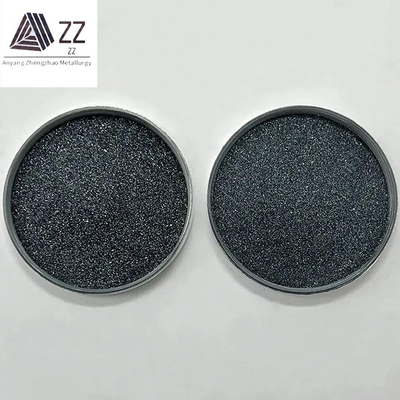
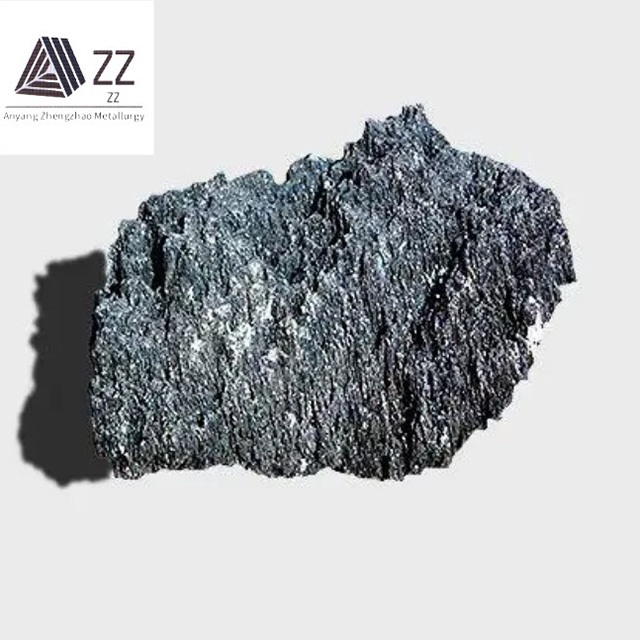
In real industry, silicon carbide does not exist as a single uniform product, and its form strongly affects what it can and cannot do. It is commonly supplied as lumps, grains, or fine powder, each serving different purposes across steelmaking, abrasives, and advanced ceramics. Loose silicon carbide grains or powders have no structural integrity by themselves, so they cannot stop bullets directly, even though the material is very hard. Only after further ceramic processing does silicon carbide gain the shape and density needed for impact resistance.
Common industrial forms include:
●Lump silicon carbide for metallurgical and refractory uses
●Graded grains for abrasives and wear applications
●Fine powder silicon carbide for ceramic sintering and composites
How a Bullet Interacts With Silicon Carbide (SiC) Under Impact
What Happens at the Moment of Impact
When a bullet hits silicon carbide (SiC), the interaction happens in a fraction of a second. The projectile carries high velocity and concentrated kinetic energy. All that force focuses on a very small contact area. Stress rises instantly. Pressure spikes. The surface must respond fast.
In those first milliseconds, hardness decides everything. If the surface is softer than the bullet core, penetration begins. If silicon carbide is harder, it resists indentation and forces the projectile to deform instead of drilling through. We often describe it in simple terms:
●The bullet transfers kinetic energy into the plate.
●Contact stress exceeds the yield strength of the projectile tip.
●The ceramic surface remains rigid long enough to break the bullet’s momentum.
The comparison below shows why hardness matters so much at impact.
Factor
Silicon Carbide (SiC)
Typical Steel Core Bullet
Surface Hardness
Extremely high
Lower than SiC
Initial Deformation
Minimal
High at tip
Energy Absorption Mode
Fracture and dispersion
Plastic deformation
Contact Area Growth
Rapid due to cracking
Gradual flattening
How Silicon Carbide (SiC) Damages the Bullet
Once contact begins, silicon carbide (SiC) does not bend like metal. It stays rigid. The projectile jacket often strips away first. Then the exposed core meets a harder surface. It erodes under extreme friction and pressure. We can picture it as the bullet grinding against something stronger than itself.
Silicon carbide affects the projectile in several ways:
●It blunts the bullet tip quickly. The pointed nose becomes flat.
●It fractures the jacket layer. That reduces structural support.
●It wears down the core surface through micro-abrasion.
This damage reduces penetration efficiency. The bullet loses shape. It loses stability. It loses energy. Many ceramic armor designs rely on this sequence. High hardness creates the initial disruption. Then the rest of the system manages the remaining force.
Energy Distribution and Crack Formation
Silicon carbide (SiC) does not absorb energy through bending. It handles impact through controlled fracture. When stress exceeds its strength limit, cracks spread outward from the impact point. These cracks are not random weakness. They are part of the energy management process.
Here is how the energy flow works in simple terms:
1. Impact generates extreme compressive stress.
2. Microcracks initiate around the contact zone.
3. Radial cracks spread outward.
4. Energy distributes over a larger surface area.
This spreading effect lowers the stress intensity at any single point. Instead of one deep penetration path, we get a wider damaged zone. That zone absorbs energy across a larger footprint. It helps prevent full perforation.
Impact Stage
Material Response
Protective Effect
Initial Contact
High compressive resistance
Bullet tip damage
Crack Initiation
Microfracture begins
Energy redirection
Crack Propagation
Radial spread
Stress distribution
Post-Impact Zone
Fragmented ceramic
Reduced penetration depth
The Importance of Support and Backing Materials
Silicon carbide (SiC) rarely works alone in real armor systems. It is strong under compression. It is brittle under tension. After cracking, it needs structural support behind it. This is where composite design becomes critical.
Typical armor structures combine layers:
●A hard silicon carbide strike face.
●A backing layer made of fiber or composite material.
●Sometimes an additional trauma-reduction layer.
The ceramic breaks the projectile. The backing catches fragments. It also absorbs residual energy. Without support, cracked silicon carbide would lose effectiveness after impact. The layered design ensures multi-stage protection.
In ballistic applications, we never look at silicon carbide alone. We look at the system. The ceramic disrupts. The backing absorbs. Together, they reduce penetration risk.
Can Silicon Carbide (SiC) Actually Stop a Bullet in Real Use
Why Raw Silicon Carbide Cannot Stop Bullets
Many people hear “silicon carbide (SiC)” and assume the material alone can block a projectile. It sounds logical. It is extremely hard. It is widely used in harsh industrial environments. However, raw silicon carbide in loose form cannot stop a bullet in real conditions.
When we talk about lump, grain, or powder silicon carbide, we are talking about particles. They have no structural bonding between them. If a bullet hits loose SiC powder, the grains simply scatter. Energy is not dispersed across a solid structure. Instead, it passes through gaps between particles.
Key reasons raw silicon carbide fails in ballistic use:
●It has no mechanical integrity as a free particle system.
●It cannot spread impact stress across a continuous surface.
●It lacks densification, so penetration resistance is minimal.
Sintered Silicon Carbide Ceramics and Bullet Resistance
The real ballistic capability appears after silicon carbide becomes a dense ceramic. During sintering, fine SiC particles bond together under high temperature. Porosity decreases. Density increases. The material transforms from loose grains into a solid plate.
High-density ceramic plates made from silicon carbide can resist high-velocity impact because they offer a unified surface. When struck, the plate spreads stress outward instead of collapsing locally. That structural continuity makes the difference between scattering grains and controlled fracture.
Form of Silicon Carbide
Structural Integrity
Bullet Resistance Capability
Loose Powder
None
No protection
Graded Grains
Limited cohesion
No structural stopping ability
Sintered Ceramic Plate
High density and bonding
Effective in armor systems
Types of Bullets Silicon Carbide Can Resist
Not all bullets behave the same way. Silicon carbide (SiC) ceramic plates are typically designed for specific threat levels. Performance depends on projectile velocity, core material, and impact angle.
In practical terms:
●Handgun rounds carry lower velocity and energy.
●Rifle rounds travel faster and deliver higher kinetic energy.
●Armor-piercing rounds use hardened cores for deeper penetration.
Silicon carbide ceramics are commonly used in hard armor plates designed to defeat standard rifle threats. Against high-velocity armor-piercing ammunition, performance depends on plate thickness, backing support, and system design.
Bullet Category
Velocity Level
Typical SiC Response
Handgun rounds
Moderate
High stopping probability in ceramic system
Standard rifle rounds
High
Effective when properly supported
Armor-piercing rounds
Very high
Requires optimized thickness and backing
Single-Hit vs Multi-Hit Performance
Ceramics do not behave like steel. They fracture under extreme stress. After one impact, the local zone around the strike point becomes damaged. That damage reduces protection in that exact area. However, surrounding areas can still remain functional.
Silicon carbide shows good fracture toughness compared to some other ceramics. It maintains structural integrity after impact better than more brittle alternatives. In multi-hit scenarios, spacing between impacts matters. If hits occur far apart, the plate may still perform effectively.
Multi-hit considerations include:
●Crack propagation patterns across the plate surface.
●Energy absorption capacity of backing materials.
●Thickness and density of the sintered silicon carbide layer.
Silicon Carbide (SiC) Compared With Other Bullet-Resistant Materials
Silicon Carbide vs Steel Armor
Steel has protected people for centuries. It is strong. It is reliable. It is also heavy. When we compare steel armor to silicon carbide (SiC), the first difference we notice is weight. Silicon carbide offers high hardness at much lower density. That reduction improves mobility. It reduces fatigue during long missions.
Steel absorbs energy through plastic deformation. It bends and may create spall fragments. Those fragments can cause secondary injuries. Silicon carbide behaves differently. It fractures in a controlled pattern. It spreads energy outward instead of sending metal fragments inward.
Here is a simple comparison:
Feature
Silicon Carbide (SiC)
Steel Armor
Density
Lower
Higher
Energy Absorption
Fracture and dispersion
Plastic deformation
Spall Risk
Minimal
Possible
Mobility Impact
Improved
Reduced due to weight
Silicon Carbide vs Other Ceramic Materials
Ceramics vary widely in performance. Some focus on extreme hardness. Others balance hardness and toughness. Silicon carbide (SiC) sits in the middle. It provides high hardness. It also maintains better fracture resistance than more brittle alternatives.
When comparing advanced ceramics:
●Some offer lower weight but crack more easily.
●Others are extremely hard but lose protection after high-speed impact.
●Silicon carbide offers a stable compromise between durability and performance.
The balance between hardness and toughness matters. Hardness damages the bullet. Toughness controls crack growth. Without toughness, protection drops after the first impact.
Ceramic Type
Hardness Level
Fracture Behavior
Multi-Hit Durability
Silicon Carbide (SiC)
Very high
Controlled fracture
Good balance
Ultra-light ceramics
Extremely high
More brittle
Lower after impact
Alumina-based ceramics
Moderate to high
Stable
Moderate
Silicon Carbide vs Soft Armor Systems
Soft armor uses high-strength fibers. It is flexible. It is comfortable. It works well against lower-velocity threats. However, fibers alone struggle against high-velocity rifle rounds. They stretch and absorb energy. They do not erode hardened bullet cores.
Silicon carbide (SiC) plays a different role. It acts as a strike face. It disrupts the projectile before it reaches the soft backing. Then the fiber layer absorbs remaining energy. We can think of it as a two-step defense.
Soft armor characteristics:
●Flexible and lightweight
●Effective for handgun threats
●Limited resistance to armor-piercing rounds
Silicon carbide ceramic plates:
●Hard surface for bullet tip disruption
●Reduces penetration depth
●Requires backing support for full system performance
What Buyers Should Understand About Silicon Carbide (SiC) for Ballistic Applications
Material Quality and Consistency Matter
Not all silicon carbide is the same. Purity affects density after sintering. Particle size distribution influences microstructure. Defects inside powder create weak zones inside the final ceramic.
When we talk about ballistic performance, small variations matter. Even minor impurities may create crack initiation points. Uniform particles help achieve higher densification during ceramic processing. That improves compressive strength and impact response.
Critical material factors include:
●Controlled particle size range
●Low impurity content
●Stable batch-to-batch consistency
●Reliable supply chain control
Industrial Silicon Carbide as the Foundation
Advanced armor ceramics begin as industrial silicon carbide. Producers such as ZZ Ferroalloy focus on metallurgical and fine powder silicon carbide grades. They control furnace production parameters. They monitor chemical composition. They ensure steady supply volumes.
A stable upstream partner supports:
●Reliable particle grading
●Predictable sintering behavior
●Reduced production defects in finished ceramics
Industrial-scale production also ensures availability. It reduces cost fluctuation. That stability benefits downstream armor manufacturers.
Upstream Factor
Influence on Final Ceramic
Particle Size Uniformity
Higher density after sintering
Chemical Purity
Fewer weak points
Production Consistency
Stable mechanical performance
Supply Reliability
Scalable armor production
Conclusion
Silicon carbide can stop a bullet only after sintering into dense ceramic plates supported by backing layers. ZZ Ferroalloy supplies stable, high-purity silicon carbide that supports advanced ceramic processing, helping manufacturers achieve consistent density, strength, and reliable ballistic performance.
FAQ
Q: Can silicon carbide(SiC) stop a bullet by itself?
A: No. Raw silicon carbide(SiC) powder or grains cannot stop bullets without sintering into dense ceramic plates.
Q: Why is silicon carbide(SiC) used in armor?
A: Silicon carbide(SiC) offers high hardness and low weight, which helps damage bullets and improve mobility.
Q: Is silicon carbide(SiC) better than steel armor?
A: It is lighter and reduces spall risk, but it requires backing layers for full protection.
Q: What types of bullets can silicon carbide(SiC) resist?
A: It can resist handgun and many rifle rounds when designed into proper ceramic armor systems.
Q: Does silicon carbide quality affect ballistic performance?
A: Yes. Consistent purity and particle size improve ceramic density and impact resistance.