Why do manufacturers choose silicon carbide(SiC) over other abrasives? Speed and precision matter in every process. This article explains why silicon carbide(SiC) performs so well. You will learn its key properties, main applications, and how it improves efficiency.
What Is Silicon Carbide (SiC) and Why Does It Matter in Abrasives?
Silicon carbide (SiC) plays a critical role in modern abrasive technology. We choose it because it cuts faster, lasts longer, and handles heat better than many alternatives.
Chemical Composition and High-Temperature Production
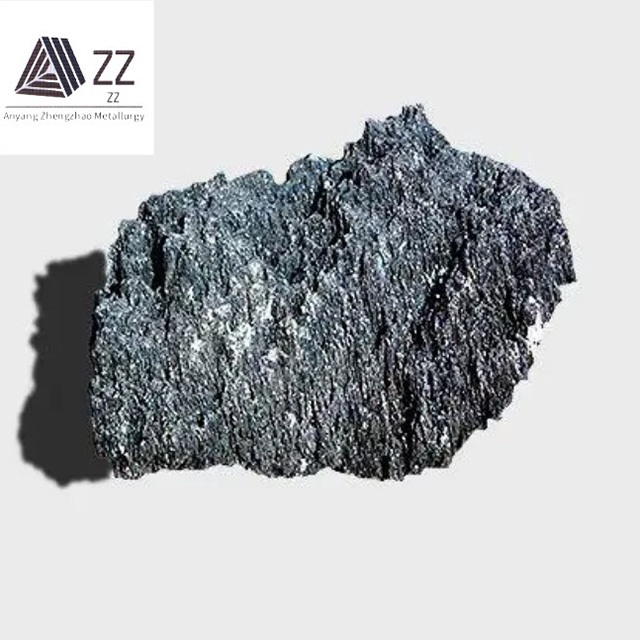
Silicon carbide (SiC) is a synthetic compound made from silicon and carbon. It forms through a controlled high-temperature reaction inside an electric resistance furnace. During production, silica sand reacts with carbon sources at temperatures exceeding 2200°C. This extreme heat creates hard crystalline structures. Those crystals become the foundation of its abrasive power.
Below is a simplified overview of the manufacturing flow:
Production Stage
Purpose
Impact on Abrasive Performance
High-temperature reaction
Forms SiC crystals
Determines hardness level
Crushing & shaping
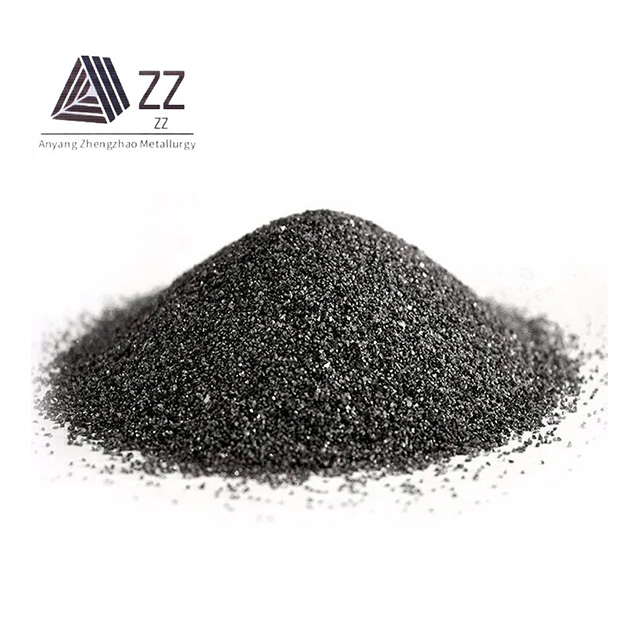
Creates angular grains
Improves cutting aggressiveness
Purification
Removes impurities
Enhances chemical stability
Grading & sieving
Controls particle size
Ensures uniform grinding results
Each step influences how silicon carbide behaves in real grinding environments. Poor grading causes uneven surfaces. Weak purification reduces durability. Strong production control improves reliability.
Key Physical Properties That Define Abrasive Performance
Silicon carbide (SiC) stands out because of its extreme physical strength and thermal behavior. Its Mohs hardness reaches approximately 9.0–9.5. That places it just below diamond-class materials. It easily cuts hard metals, ceramics, and glass. Grinding pressure decreases. Efficiency increases.
Several core properties explain its industrial importance:
High hardness
It penetrates tough surfaces quickly. Material removal rates remain high.
Particles fracture under stress. New cutting edges appear continuously.
High thermal conductivity
Heat disperses rapidly. Workpiece damage reduces.
Oxidation and corrosion resistance
It remains stable in harsh environments.
Strong wear resistance
It maintains cutting ability over extended cycles.
To better understand its performance advantages, compare key physical characteristics:
Property
Silicon Carbide (SiC)
Industrial Significance
Mohs Hardness
9.0–9.5
Enables aggressive cutting
Thermal Conductivity
High
Reduces overheating risk
Chemical Stability
Excellent
Maintains structure under heat
Grain Structure
Sharp, angular
Produces cleaner finishes
Why Is Silicon Carbide (SiC) So Effective as an Abrasive?
Extreme Hardness and Cutting Power
Silicon carbide (SiC) ranks near the top of industrial abrasives in hardness. Its Mohs hardness reaches approximately 9.0–9.5. That level allows it to cut through hard metals, ceramics, and composite materials efficiently. It removes material quickly while maintaining dimensional accuracy.
Its cutting power creates several operational advantages:
●Higher material removal rate
It penetrates surfaces faster than softer abrasives. Production cycles shorten. Machine utilization improves.
●Lower required grinding pressure
Operators apply less force. Equipment wear reduces. Energy consumption stays controlled.
●Improved surface control
It creates consistent scratch patterns. Surface finishes remain uniform.
Below is a performance comparison showing why silicon carbide (SiC) stands out:
Performance Factor
Silicon Carbide (SiC)
Softer Abrasives
Cutting Speed
Very high
Moderate
Pressure Required
Lower
Higher
Efficiency on Hard Materials
Excellent
Limited
Surface Finish Control
Precise
Variable
Because of these characteristics, silicon carbide (SiC) is commonly selected for processing hard alloys, cast iron, and technical ceramics. It delivers speed without sacrificing accuracy.
Self-Sharpening Through Brittle Fracture
One of the most important reasons silicon carbide (SiC) works so effectively is its brittle fracture behavior. When grinding pressure increases, its grains crack in a controlled way. They break into smaller fragments. Each fracture exposes fresh, sharp edges.
This self-renewing action provides several benefits:
●Continuous cutting sharpness
It does not dull easily. Instead, it refreshes itself.
●Cleaner surface finishes
Newly formed edges produce fine scratch patterns.
●Stable grinding consistency
Cutting performance remains steady over time.
The process works like this:
1. Grain contacts the surface.
2. Pressure builds during friction.
3. Micro-fracture occurs.
4. New cutting points appear.
This cycle repeats rapidly. It keeps silicon carbide aggressive. It also reduces clogging during surface preparation or blasting operations.
Thermal Conductivity and Heat Control
Grinding generates heat. Excess heat damages workpieces. It causes surface burns or micro-cracks. Silicon carbide (SiC) helps manage this risk because it conducts heat efficiently.
Here is a simplified view of how heat control affects performance:
Factor
Silicon Carbide (SiC) Impact
Heat Build-Up
Lower accumulation
Surface Burn Risk
Reduced
Suitability for High-Speed Grinding
Strong
Performance in Dry Conditions
Stable
Because of this, silicon carbide (SiC) is widely used in high-speed machining and refractory processing environments where temperature control is critical.
Chemical Stability in Harsh Environments
Silicon carbide (SiC) remains stable in chemically aggressive environments. It resists alkalis. It tolerates most corrosive conditions. It maintains structural integrity even at elevated temperatures.
Its chemical reliability supports applications such as:
●Metallurgical processing
Stable under furnace exposure.
●Refractory systems
Maintains shape under thermal cycling.
●Surface treatment in industrial plants
Main Industrial Applications of Silicon Carbide (SiC) Abrasives
Grinding Wheels and Cutting Tools
In bonded abrasive systems, silicon carbide (SiC) works as an aggressive cutting grain. It is pressed into grinding wheels or combined in resinoid and vitrified bonds. Once rotating at high speed, it removes material quickly and evenly. Operators notice smoother feed control and reduced vibration during machining.
Typical uses include:
●Bonded grinding wheels
They machine cast iron and non-ferrous alloys. The sharp grains fracture and renew themselves. Surface finish stays consistent.
●Cutting discs and saw blades
It slices brittle materials efficiently. Heat buildup remains manageable.
●Tool sharpening systems
It restores edges on carbide tools. Grinding remains precise and stable.
Below is a simplified comparison of tool performance using silicon carbide (SiC):
Application Type
Why SiC Is Used
Performance Benefit
Grinding wheels
High hardness
Fast material removal
Cutting discs
Sharp angular grains
Clean, controlled cuts
Sharpening stones
Self-fracturing structure
Continuous sharp edges
Many industrial buyers prefer working with integrated producers such as Anyang Zhengzhao Metallurgical Refractory Co., Ltd. (ZZ Ferroalloy) because they supply graded silicon carbide (SiC) suitable for bonded abrasive manufacturing.
Sandblasting and Surface Treatment
When surfaces require cleaning or preparation, silicon carbide (SiC) performs aggressively. It strips rust. It removes paint. It smooths uneven metal quickly. Its angular grains impact surfaces and create effective surface profiles for coating adhesion.
In blasting applications, it supports:
Rust removal on steel structures
It cuts corrosion layers efficiently. Surface integrity remains intact.
Automotive refinishing
It cleans frames and panels. It prepares surfaces before repainting.
Shipbuilding maintenance
It handles large steel areas. Productivity improves in open blasting systems.
Here is a functional comparison in blasting operations:
Blasting Media
Cutting Strength
Surface Profile
Reusability
Silicon Carbide (SiC)
Very strong
Sharp, defined
Moderate
Glass Beads
Mild
Smooth
High
Garnet
Medium
Moderate
Low to moderate
Precision Grinding and Semiconductor Processing
Silicon carbide (SiC) also supports high-precision environments. It is not limited to heavy industry. It plays a role in electronics and fine polishing tasks. Its stable grain size and predictable fracture behavior allow accurate surface control.
Key precision uses include:
●Silicon wafer polishing
Fine SiC powder refines wafer surfaces. Scratch depth remains controlled.
●PCB substrate grinding
It levels surfaces before assembly. Dimensional accuracy improves.
●Optical and ceramic finishing
It polishes lenses and advanced ceramics. Surface clarity increases.
For precision grades, particle size control becomes critical.
Precision Application
Required Feature
SiC Advantage
Semiconductor polishing
Fine particle distribution
Uniform scratch pattern
PCB processing
Stable grain size
Consistent removal rate
Optical finishing
Sharp micro-grains
High clarity results
It performs reliably in controlled environments. It maintains uniform cutting pressure. It supports repeatable production standards.
Stone, Glass, and Construction Materials
In construction and decorative industries, silicon carbide (SiC) handles brittle materials efficiently. It cuts marble and granite cleanly. It shapes glass without excessive cracking. It prepares concrete surfaces for renovation.
Its performance supports:
●Marble and granite cutting
●It removes material quickly. Edge chipping reduces.
It levels rough floors. Adhesion improves for coatings.
Unlike softer abrasives, silicon carbide (SiC) maintains cutting speed even on dense natural stone. It does not rely on excessive force. It relies on hardness and sharpness. That balance explains why it remains widely used across architectural and structural processing industries.
How Does Silicon Carbide (SiC) Compare with Other Abrasives?
When selecting an abrasive, we often compare cutting speed, durability, surface finish, and cost. Silicon carbide (SiC) performs differently from aluminum oxide, garnet, or glass beads.
Silicon Carbide (SiC) vs Aluminum Oxide
Silicon carbide (SiC) and aluminum oxide are both widely used industrial abrasives. However, they behave differently during grinding and cutting. Silicon carbide is harder and sharper. Aluminum oxide is tougher and more impact-resistant. These differences influence performance in real applications.
Let’s compare their core characteristics:
Property
Silicon Carbide (SiC)
Aluminum Oxide
Mohs Hardness
9.0–9.5
Around 9.0
Grain Shape
Very sharp, angular
Blocky, tough
Cutting Speed
Very fast
Moderate
Durability
Lower (brittle fracture)
Higher (tougher grain)
Best For
Non-ferrous metals, ceramics, glass
Ferrous metals, structural steel
We often choose silicon carbide (SiC) when:
●Processing non-ferrous metals
It cuts aluminum, brass, and copper efficiently. Loading is reduced. Surface finish improves.
●Grinding hard and brittle materials
Ceramics and glass respond better to sharp grains. It produces cleaner edges.
●Needing faster stock removal
It reduces cycle time. Productivity increases.
Aluminum oxide may last longer under heavy impact. Silicon carbide cuts faster. So the decision depends on material hardness and desired surface finish.
Silicon Carbide (SiC) vs Garnet and Glass Beads
Garnet and glass beads are commonly used in blasting applications. They are less aggressive than silicon carbide (SiC). Their particle shapes and hardness levels change the way they interact with surfaces.
Here is a simplified comparison:
Abrasive Type
Cutting Aggressiveness
Surface Finish
Reusability
Typical Use
Silicon Carbide (SiC)
Very high
Sharp, defined
Moderate to low
Heavy cleaning, hard materials
Garnet
Medium
Moderate
Low to moderate
General blasting
Glass Beads
Low
Smooth, polished
High
Light cleaning, polishing
Silicon carbide (SiC) performs best when:
●Strong surface profiling is required
It creates sharp anchor patterns. Coating adhesion improves.
●Removing thick corrosion layers
It cuts rust and scale quickly. Time savings become noticeable.
●Working on hard substrates
Stone, hardened steel, and ceramics respond well.
However, due to its brittle nature, silicon carbide grains fracture faster. Reusability decreases compared to glass beads. In return, we gain faster cutting and higher efficiency. That trade-off often makes sense in industrial settings where speed matters more than media recycling.
Conclusion
Silicon carbide (SiC) delivers high hardness, fast cutting, and strong heat control in abrasive work. ZZ Ferroalloy supplies graded silicon carbide with reliable quality and steady output. Their products help manufacturers improve efficiency, reduce downtime, and maintain consistent surface results.
FAQ
Q: What is silicon carbide (SiC) used for as an abrasive?
A: Silicon carbide (SiC) is used for grinding, cutting, blasting, and polishing hard materials like metal, glass, and ceramics.
Q: Why is silicon carbide (SiC) better for hard materials?
A: Silicon carbide (SiC) has very high hardness and sharp grains, so it cuts faster and cleaner than softer abrasives.
Q: How does silicon carbide compare to aluminum oxide?
A: Silicon carbide removes material faster, while aluminum oxide lasts longer under heavy impact conditions.
Q: Is silicon carbide (SiC) cost-effective?
A: Silicon carbide (SiC) offers strong cutting efficiency and stable performance, which lowers processing time and total cost.
Q: Can silicon carbide be used in sandblasting?
A: Yes, it works well for aggressive surface cleaning and rust removal on hard industrial surfaces.